The Wheel of Five (Dutch: Schijf van Vijf) is a tool developed by the Dutch Nutrition Centre that shows which foods contribute to a healthy diet. Its five sections provide recommendations for different food groups and the recommended amounts. These recommendations are based on scientific research and take health, sustainability and food safety into account.
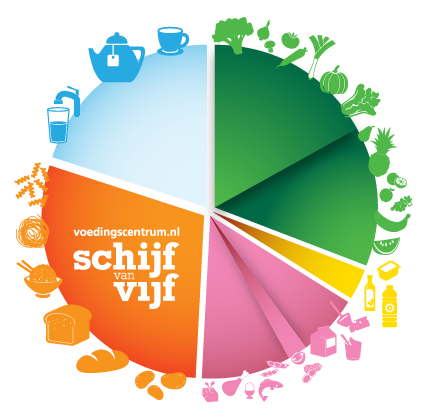
The VISwijzer in the Wheel of Five
Fish, crustaceans, and shellfish are included in the Wheel of Five because they provide important nutrients, and eating fish reduces the risk of certain cardiovascular diseases. The Health Council of the Netherlands recommends eating 100 grams of fish per week, preferably oily fish. This used to be the end of it, but a new aspect of the advice issued in December 2025 is that the Health Council not only considers the health benefits of eating fish, but also explicitly addresses its sustainability. The advice mentions MSC, ASC and the VISwijzer as tools to help consumers choose sustainably caught or farmed fish. This means that the VISwijzer now also has a place in the dietary recommendations of the Dutch Nutrition Centre. Whereas previously the focus was primarily on the nutritional value of fish, attention is now also given to the environmental impact of the fish people eat. The VISwijzer provides practical guidance by showing how sustainable different fish species, origins and fishing and farming methods are. This helps consumers choose fish that is not only healthy, but also produced more sustainably.
The Dutch Nutrition Centre has incorporated this advice into the updated Wheel of Five. The Dutch Nutrition Centre’s website also refers to the VISwijzer as a tool for making more sustainable fish choices. This means that the focus is not only on the nutritional value of fish, but also on the environmental impact of catching or farming it.
Not all fish is equally sustainable. For wild-caught fish, the main concerns include overfishing, unwanted bycatch and damage to the seabed. For farmed fish, these include pollution of surrounding waters, loss of habitats for native fish, and the use of fishmeal and fish oil in feed. The impact varies considerably depending on the species, its origin and the method used to catch or farm it. The VISwijzer assesses both wild-caught and farmed fish based on these factors to help consumers make more sustainable choices.
Which fish is a sustainable choice?
The VISwijzer uses a traffic light system. Green indicates a good sustainable choice, orange indicates a second choice for when green isn’t available, and red means that the fish has several sustainability problems and is best avoided. The Dutch Nutrition Centre does not use fish species rated red in its recipes. The VISwijzer assesses the sustainability of fishing or farming methods, not the nutritional value or food safety of the product. Whether a fish product is also included in the Wheel of Five depends on other factors, such as its salt content.


Use the VISwijzer to check which origin and fishing or farming method offers the best choice. This helps put the recommendation to eat sustainable fish every week into practice.
Want to know more?
Also read our news article on the new advice of the Dutch nutrition centre regarding fish consumption.
Visit the Wheel of Five for nutritional advice and the VISwijzer to find out which fish are currently recommended.